
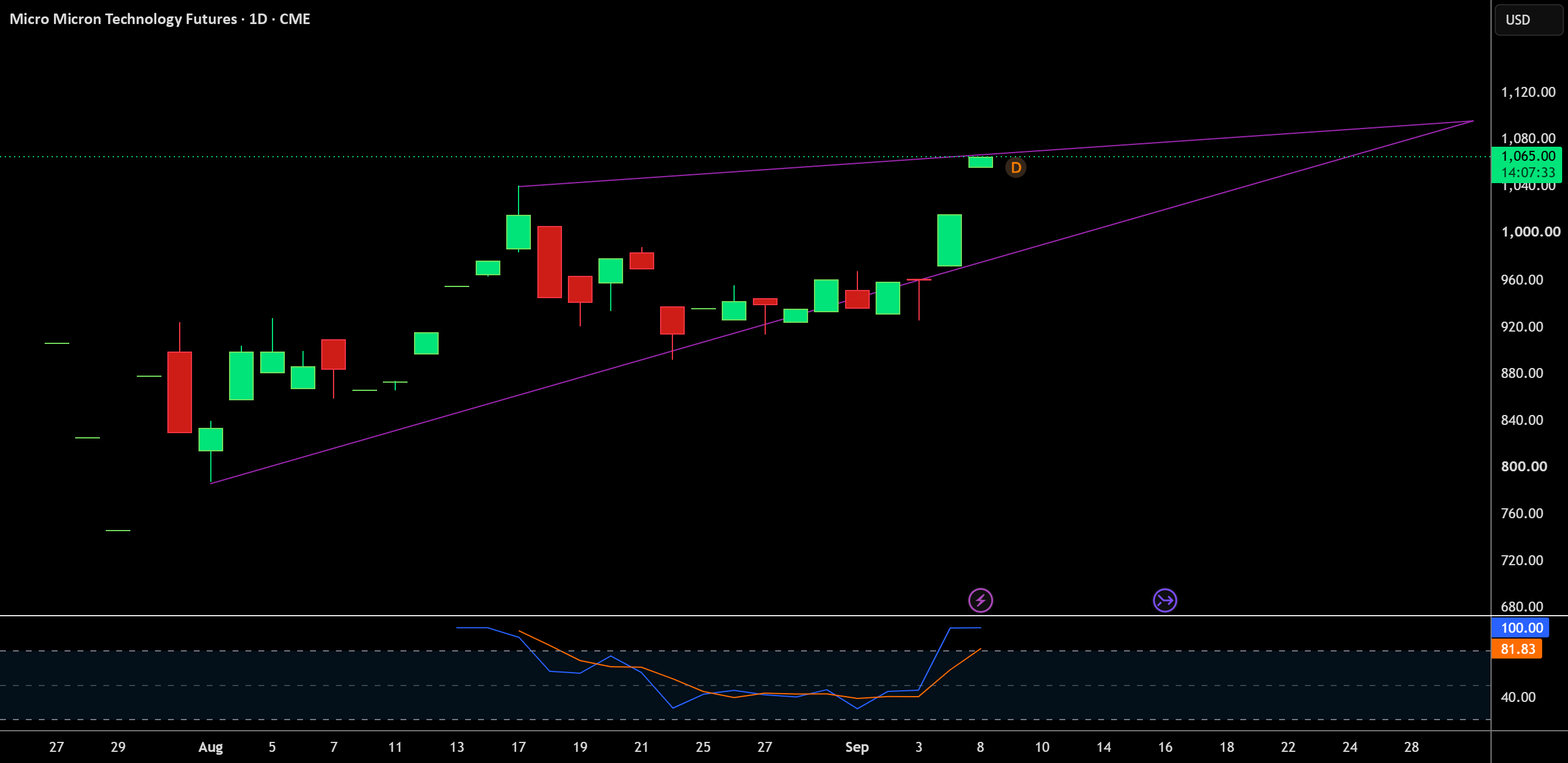
The AI Memory Boom and Industry Trends
Micron Technology controls a massive share of the AI memory market. Traders access Micro Micron Technology futures (XMU) for leveraged exposure. The underlying stock skyrocketed 256% in 2026. This surge directly reflects relentless demand for artificial intelligence servers. High-bandwidth memory dictates the speed of modern AI. Investors see immense potential in these futures contracts. They offer agile trading strategies in a volatile market. However, a major hurdle now threatens this momentum.
Geopolitics and Geostrategy
Global tech reliance on Taiwan creates severe geostrategic vulnerabilities. Nearly 10,000 union members at Taoyuan and Taichung facilities threaten a strike. They represent two-thirds of Micron’s roughly 15,000 employees in those cities. The unions demand a one-off bonus worth about 83 months of salary. From fiscal 2027, they want bonuses set at 15% of operating profit, paid quarterly. Samsung’s chip division and SK hynix already pay 10.5% and 10% of operating profit, respectively. Micron’s Taiwan bonuses have run about 2.6 months of salary under a plan capped near five months. That gap drives the entire dispute.
Formal mediation began on September 4 and produced no agreement. Both sides scheduled a second session. Taiwan law requires failed mediation before any legal strike vote. Even then, a strike needs a majority of all union members in a secret ballot. The 80% survey figure from August reflects only members who participated.
Taiwan hosts Micron’s largest manufacturing base and roughly 60% of global production capacity. The island holds about $19 billion of Micron’s long-lived assets, more than any other country. Micron has invested roughly $43.9 billion there. This geographic concentration poses immense geopolitical risks. A localized labor dispute could cripple the global AI supply chain. Competitors monitor this vulnerability closely. Strategic diversification remains a massive challenge for semiconductor giants.
Macroeconomics and Economics
Tight memory supply drives pricing power and profit margins higher. The macroeconomic environment strongly favors semiconductor producers right now. Capital flows heavily into AI infrastructure. Micron micro futures capture these macroeconomic shifts perfectly. Traders leverage these contracts to hedge against economic downturns. The 10-share micro contracts trade nearly 23 hours a day with reduced margin requirements. A potential supply shock in Taiwan threatens this economic balance. Rising production costs could severely impact future contract valuations.
Business Models, Management and Leadership
A successful business model requires stable labor relations. Micron leadership faces a critical test. Management must negotiate swiftly to prevent a catastrophic strike. Micron Taiwan announced it will unveil a new Incentive Pay Plan in October. The company calls it the largest bonus distribution in its history. That timing places the resolution weeks away while mediation continues.
The profit backdrop makes the union case powerful. Quarterly revenue reached $41.46 billion, up 346% year over year. Operating profit surged roughly 1,436% to $33.3 billion. Net income hit $28.24 billion. Micron holds about 25% of the global DRAM market, just behind SK hynix at 26%.
Disrupted production destroys revenue and shatters investor confidence. Executive leaders must balance corporate profitability with worker compensation. Smart management will resolve this before production halts. Traders watch leadership decisions closely. A failed negotiation will instantly tank micro futures prices.
Company Culture and Innovation
Innovation demands a motivated and focused workforce. Micron culture historically prioritized aggressive technological advancement. Engineers continuously push the boundaries of high-bandwidth memory. However, labor unrest signals a fractured company culture. Employees feel disconnected from the massive corporate profits. Maintaining peak innovation requires resolving these internal grievances. A strong culture accelerates production and drives future growth. Disenfranchised workers simply do not innovate at peak capacity.
Technology and Cybersecurity
Advanced DRAM technology secures global data centers. Fast memory directly supports robust cybersecurity infrastructure. AI algorithms require instant data access to detect threats. Micron provides the exact hardware needed for these defenses. Any production halt jeopardizes global cybersecurity advancements. Hackers exploit vulnerabilities when hardware upgrades stall. Micron micro futures reflect this critical technological reliance. Reliable memory chips protect sensitive corporate and government networks.
Science, High Tech, and Patent Analysis
Patent analysis reveals Micron dominance in memory architecture. They hold crucial patents for high-bandwidth memory design. This high-tech science dictates the pace of AI evolution. Semiconductor physics limits how small memory cells can shrink. Micron scientists continually break these physical barriers. Their patented innovations secure a massive competitive advantage. Micro futures traders value this intellectual property highly. Competitors struggle to bypass these deep patent moats.
The Pharmaceutical Industry Connection
Computational drug discovery relies entirely on AI servers. These servers desperately need Micron high-bandwidth memory. Pharmaceutical companies use AI to simulate complex molecular interactions. Fast memory drastically reduces the time to discover new drugs. A chip shortage directly delays life-saving pharmaceutical research. Biotech firms depend on this specific semiconductor hardware. Therefore, Micron micro futures indirectly track pharmaceutical innovation speed.
Future Outlook
Micron micro futures offer incredible opportunities and severe risks. The Taiwan labor dispute threatens the entire AI hardware ecosystem. Management must fix this crisis immediately. Investors must monitor geopolitical tensions and union negotiations closely. Strong leadership and continued innovation will sustain the rally. Failure could trigger a massive market correction. Traders must stay vigilant. The future of AI hardware hangs in the balance.