
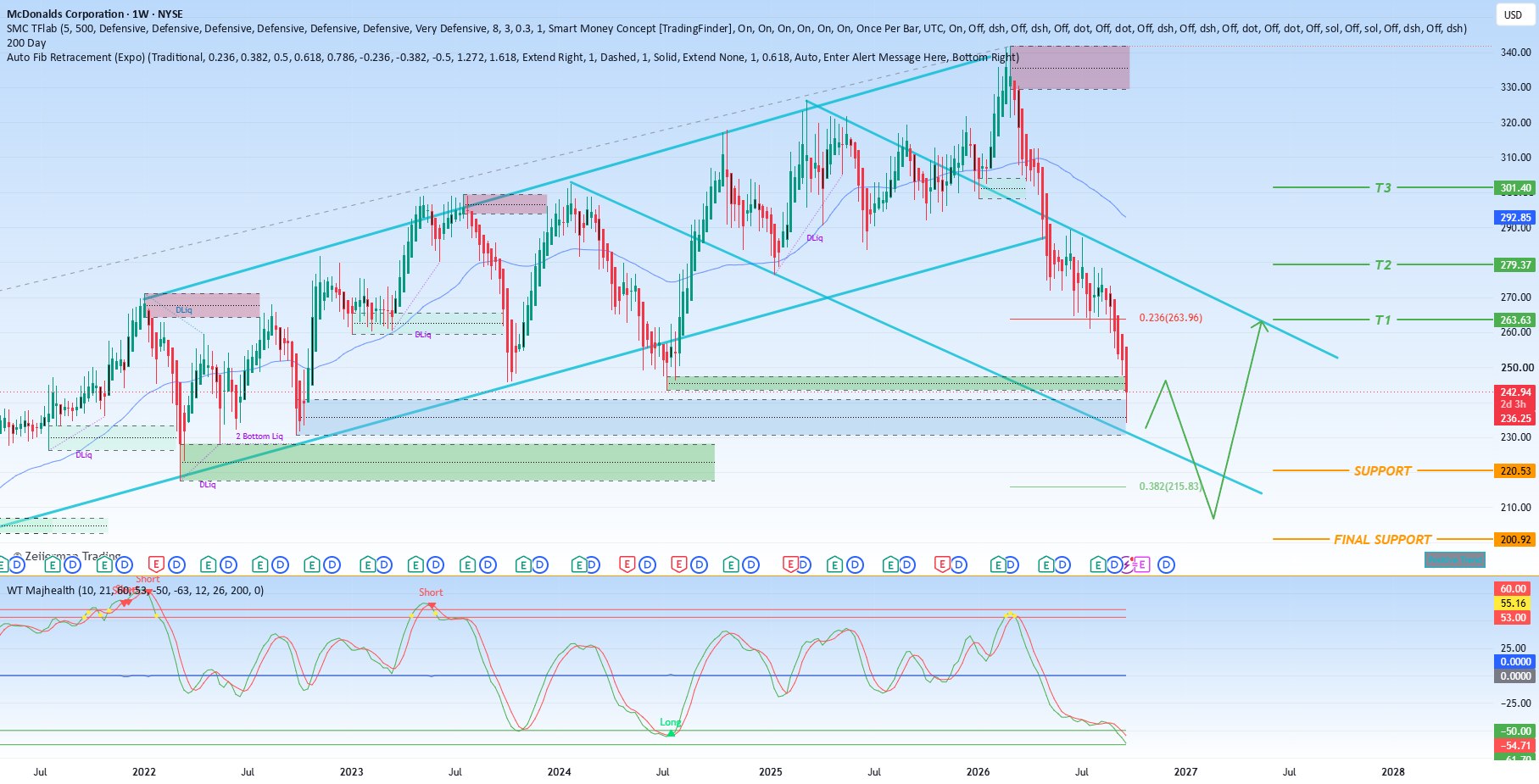
McDonald’s (MCD) is making one of its largest strategic commitments in recent years, announcing plans to invest up to $8.5 billion in a broad growth initiative designed to win back customers and strengthen its core business. The fast-food giant is framing the effort under its McDonald’s >NEXT strategy, which combines restaurant enhancements, menu innovation, and a renewed focus on the worker experience.
The investment is intended to flow throughout McDonald’s restaurant system, with the goal of making locations more contemporary, efficient, and friendly. Rather than a narrow refresh, the program appears designed to modernize the overall McDonald’s experience—from how restaurants look and operate to how quickly and consistently customers are served. The company plans significant spending across its system as it looks to improve the day-to-day experience in its restaurants.
A major part of the spending will also help pay for new menu items. McDonald’s is aiming to give customers additional reasons to visit more often, using menu innovation as a way to drive traffic and keep the brand relevant amid evolving consumer preferences. In the highly competitive fast-food industry, new products and limited-time offerings have become important tools for attracting attention, encouraging repeat visits, and differentiating chains from rivals.
The McDonald’s >NEXT program also places a strong emphasis on workers. McDonald’s is connecting employee experience to speedier service and a more consistent customer experience. That linkage suggests the company views its workforce not just as a cost center but as a critical part of improving operations. If employees are better supported, trained, and equipped, the company appears to believe that service times can improve and customers will have a more reliable experience across locations.
For investors, the size of the proposed investment puts execution squarely under the spotlight. Restaurant improvements and menu adjustments often require considerable up-front investment before any gain in traffic or sales is reflected in financial results. That creates a period of uncertainty: the company must spend meaningfully today in hopes of generating stronger performance tomorrow. Investors will be watching closely to see whether the spending produces measurable returns rather than simply adding to costs.
The company is unveiling the strategy as it seeks to enhance its core business and respond to changing consumer preferences and competition in the fast-food industry. McDonald’s is not alone in facing pressure to modernize operations, improve digital and drive-thru experiences, and offer compelling value. Rivals across the sector are also investing in restaurant remodels, technology, marketing, and menu development, making execution and speed increasingly important.
The next driver for McDonald’s will be whether it can turn this investment into improved restaurant traffic and comparable sales as the >NEXT strategy rolls out. If the company can convert higher spending into more visits, stronger average tickets, and better customer satisfaction, the plan could reinforce its position as a leading global fast-food brand. If not, the scale of the investment could become a point of scrutiny for investors and analysts alike.
In short, McDonald’s is betting up to $8.5 billion that a better restaurant experience, refreshed menu offerings, and stronger support for workers will bring customers back more often. The strategy is ambitious, but its success will ultimately depend on execution—and on whether customers respond by visiting McDonald’s more frequently.